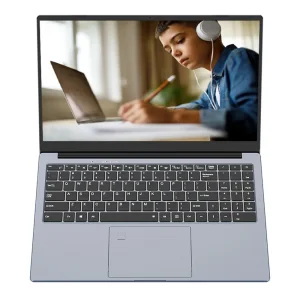
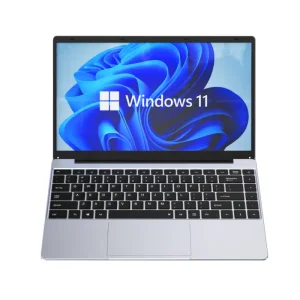
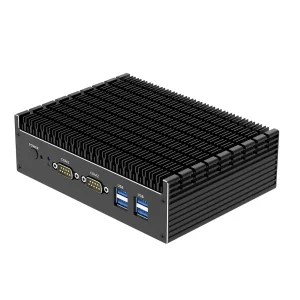
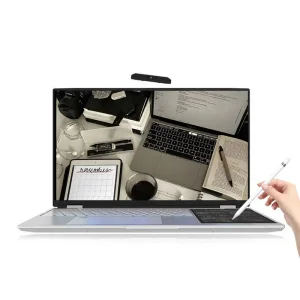
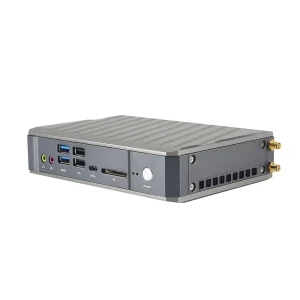
Explore our highly reliable, high-performance customizable laptops and industrial mini PCs engineered for harsh conditions, academic applications, and heavy business workloads.
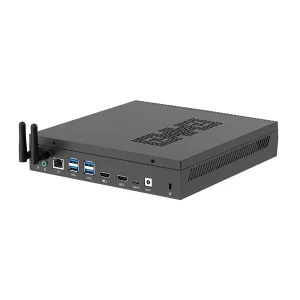
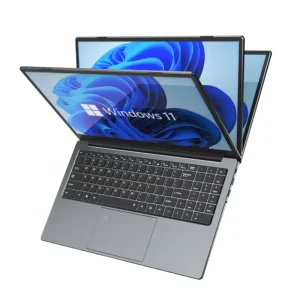
A macroeconomic analysis of why enterprise-level operations are shifting away from active-cooling architectures.
In modern industrial operations, the standard, fan-cooled personal computer represents a severe point of failure. In settings such as automated assembly plants, logistics warehouses, and clinical environments, airborne dust, oil particles, and mechanical vibrations are omnipresent. An active cooling fan functions as a vacuum, drawing contaminants into the system's core. Over time, this leads to dust accumulation on vital motherboard components, fan bearing failure, thermal throttling, and eventual system shutdown.
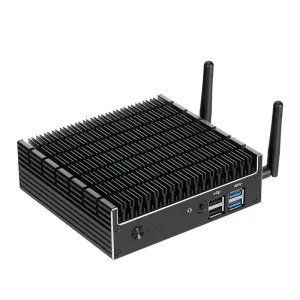
Fanless computing architectures resolve this vulnerability by relying entirely on passive cooling. By using the system’s chassis as a heat sink, these devices dissipate thermal energy through conduction and natural convection. Consequently, global demand for industrial-grade fanless laptops and microcomputers has risen exponentially. Organizations now calculate the true Cost of Ownership (TCO) not just by initial purchase price, but by computing longevity and the reduction of field service costs.
Industrial buyers prioritize longevity and reliable operations over consumer-grade aesthetic designs. Standard hardware purchasing checklists now include robust thermal dissipation, extended lifecycle support, and customization flexibility. The procurement cycle for fanless laptops is shifting from simple off-the-shelf purchases to collaborative ODM (Original Design Manufacturer) partnerships. Enterprises seek out factories that offer custom BIOS configurations, physical IO alterations (such as legacy RS232, RS485, and dual RJ45 Ethernet ports), and certified long-term supply chain guarantees spanning 5 to 7 years.
Deploying specialized silent computing hardware across diverse, high-risk operational environments.
Sterile medical cleanrooms cannot tolerate circulating dust or noise. Fanless laptops and mini PCs prevent contamination and maintain quiet environments for patient care.
With high levels of sawdust, oil spray, and physical shock, industrial shop floors rely on sealed fanless hardware to control machinery without dust-induced short circuits.
Humid, salty coastal air quickly ruins standard fans. Fanless enclosures resist corrosion and operate reliably in hot desert or polar environments.
The physics behind passive cooling and the engineering methods used to maintain low CPU temperatures without fans.
Standard laptop systems cool components by using air currents to draw heat away from small copper heat blocks. Fanless computing, by contrast, relies on a highly efficient thermal path: conduction from the CPU/GPU silicon directly to a copper vapor chamber or solid heat pipe, which transfers the heat to the heavy outer aluminum chassis. The chassis is designed with large fins that maximize surface area, allowing heat to escape into the surrounding air through natural thermal convection.
To prevent performance loss from thermal throttling under high workloads, modern fanless designs use advanced materials. Graphene sheets, phase-change interface materials, and high-purity aluminum alloys are standard components. These elements allow processors like Intel Core i7 and AMD Ryzen chips to run at their peak speeds without a cooling fan.


Customize every possibility for the dream of small brands
In Shenzhen, a city where technology and innovation intertwine, countless entrepreneurs set out every day with the dream of changing the world. They may want to subvert the home audio-visual experience with a mini host, or use customized laptops to give wings to education in remote areas, or use industrial computers to promote the intelligent transformation of factories... But the reality is often: the needs of small brands are always overwhelmed by the standardization of the big market.
So, Jinghong was born.
In 2014, we started with a simple belief—"No matter how small the demand is, it deserves to be taken seriously." For 9 years, we have been deeply involved in the field of customization. From mini hosts to industrial computers, from laptops to fanless embedded devices, Jinghong has never stopped exploring how to use technology to "reduce the burden" of entrepreneurs' creativity.
Customized service like a partner:
Production philosophy that lets quality speak:
Long-termism that grows with you:
Jinghong is not a cold factory, but an amplifier of dreams
Before each device leaves the factory, engineers will affix a unique QR code - scan it and you can see the birth log of this machine: from the source of chip procurement to the last quality inspection process, even including the signature of the assembly technician. Because we believe: transparency is the starting point of trust.
If you are also tired of "making do", if you want your product to truly become an extension of the brand, welcome to the Jinghong factory in Guanlan, Shenzhen. Touch the antifreeze keyboard customized for polar scientific research, try the cool host designed for e-sports hotels, and you will find that the ambition of small brands should be listened to seriously.
Jinghong, customization is not just about hardware, but also the confidence of entrepreneurs to move forward. Your needs are our most important orders.
Ensuring that passive industrial computers meet international safety and environmental regulations.
Exporting custom compute architectures to global markets requires strict compliance with international standards. To sell laptops and industrial micro-hosts in regions like North America, Europe, and Asia, factories must pass rigorous regulatory audits. A high-quality manufacturer must guarantee compliance with regulations such as **CE (Conformité Européenne)**, **FCC (Federal Communications Commission)**, and **RoHS (Restriction of Hazardous Substances)**.
Additionally, the factory environment must follow the **ISO 9001** quality management system, ensuring trace-ability for every batch. The manufacturing process includes several key tests:
Answering common questions about B2B sourcing and passive cooling technology.
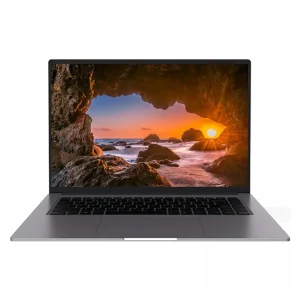
Select from our line of high-performance gaming laptops, dual-screen workstations, and industrial micro hosts for your business needs.
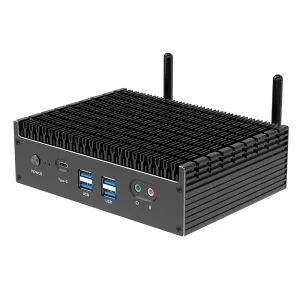
 JingHong Device