Explore our high-performance line of custom industrial hosts, motherboards, and rugged computing solutions optimized for edge deployment.
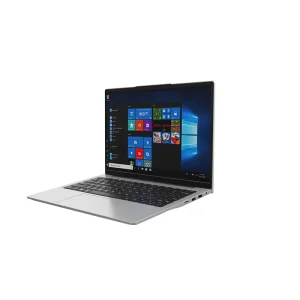
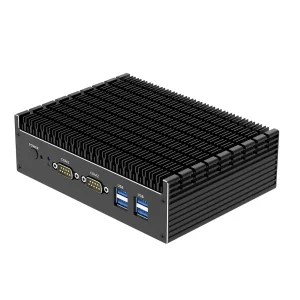
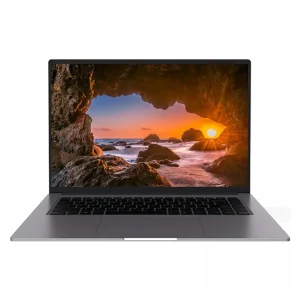
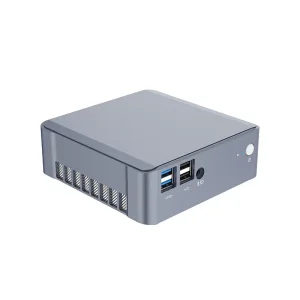
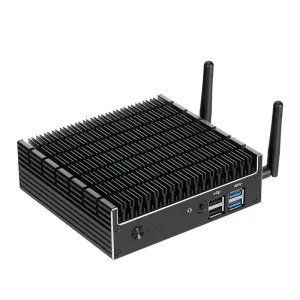
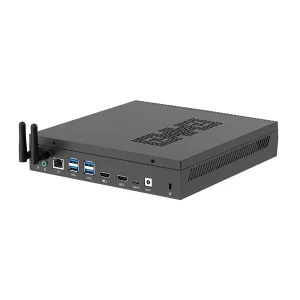
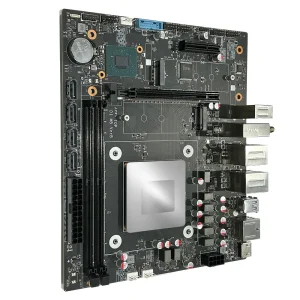
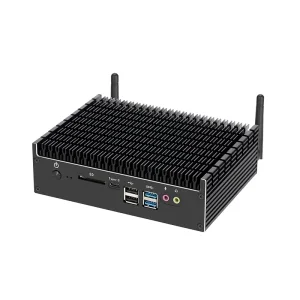
In the contemporary era of decentralized computational models, the demand for high-performance, compact, and extensible computing hardware has reached unprecedented levels. The traditional architecture of bulky industrial tower servers is rapidly being superseded by Small Form Factor (SFF) Mini PCs that do not compromise on processing capability. At the core of this transition is the integration of the PCI Express (PCIe) protocol within miniature configurations. This design permits system designers, original equipment manufacturers (OEMs), and value-added resellers (VARs) to incorporate highly specialized expansion cards—ranging from fieldbus interface modules (Profibus, EtherCAT) to high-speed fiber-optic network interface cards (NICs) and hardware accelerators for Artificial Intelligence (AI) and machine learning (ML)—into spaces smaller than three liters.
Historically, embedding a PCIe slot into a miniature footprint posed extreme thermal, mechanical, and signal integrity challenges. Today, advanced manufacturing techniques, intelligent board routing, and high-frequency simulation software allow for custom-designed carrier boards that natively expose PCIe lanes. This evolution has democratized custom computing, allowing small to mid-sized brands to compete directly with global conglomerates by creating bespoke configurations optimized for specific vertical operations rather than relying on generalized, off-the-shelf devices.
Investing in custom hardware architectures introduces immediate strategic advantages. Rather than paying licensing overhead for unnecessary peripheral features or modifying application software to bypass hardware constraints, businesses can customize their physical computing interfaces. A custom PCIe Mini PC allows for the integration of custom-length riser cables, horizontal brackets, and thermal plates designed around an application’s specific operating envelope. This reduces overall unit volume, minimizes points of failure by replacing consumer-grade cabling with direct board-to-board mating sockets, and dramatically optimizes unit-level costs over high-density deployments.
Implementing PCIe expansion within a mini-PC framework necessitates careful consideration of the physical space constraints, electrical limitations, and the thermal profile of the system. Custom motherboard engineering plays a primary role here. Unlike standard ATX motherboards that feature multiple dedicated slots, a Mini-ITX or proprietary sub-10cm form factor board must maximize the utility of every millimeter of PCB copper trace.
Direct processor-to-device trace routing eliminates latency and cross-talk. Systems can be configured with dual M.2 Key-M slots running at Gen 4 x4, or converted via customized active risers to full x8 or x16 physical slots supporting legacy frame grabbers, hardware RAID, or optical networking modules.
Operating high-frequency PCIe Gen 4/5 links inside a highly compact casing demands premium impedance-controlled PCB materials (such as Megtron 6) and strategic ground shielding layers to insulate weak data signals from nearby power converter circuitry.
Our cooling systems route heat through phase-change copper heatpipes directly to the aluminum fins of the outer chassis. Fanless systems are structurally designed to dissipate up to 35W TDP from the CPU and up to 25W TDP from the auxiliary PCIe device without thermal throttling.
To prevent hotspot propagation, our mechanical design utilizes advanced Finite Element Analysis (FEA) to simulate thermal behavior inside the computer chassis under maximum computational load. For example, if a client installs a high-throughput multi-port GbE card or a localized Edge AI hardware accelerator, we design a customized thermal bridge blocks that connect the card's processor to the main chassis casing. This turns the entire chassis into a heat sink, eliminating the reliance on small, high-RPM fans that represent a major point of physical failure in dusty or vibration-prone environments.
Industrial applications are diverse, requiring computing systems designed to excel in unique, demanding environments. By providing customized PCIe expansion pathways, Mini PCs serve as adaptable core modules for various complex workflows.
By integrating dedicated FPGA or CAN-bus PCIe modules, our industrial Mini PCs act as local control hubs. They bridge legacy assembly line equipment with modernized industrial ethernet backbones, handling complex sensor fusion tasks directly at the shop floor level.
By utilizing dual M.2 or PCIe x4 slots configured with specialized AI processing units (such as Google Coral TPU or Intel Myriad modules), our systems run multi-channel real-time object detection, traffic analytics, and POS security monitoring with minimal latency.
Compact form factors permit easy integration into mobile medical diagnostic carts. High-bandwidth PCIe capture cards allow for real-time processing of high-definition ultrasound and surgical video feeds, meeting medical compliance benchmarks without adding bulk.
Across these varied use-cases, the underlying computing engine remains unified and efficient. Systems are built for longevity, reducing operational maintenance costs and lowering total cost of ownership (TCO) across complex enterprise deployments.
Customize every possibility for the dream of small brands

In Shenzhen, a city where technology and innovation intertwine, countless entrepreneurs set out every day with the dream of changing the world. They may want to subvert the home audio-visual experience with a mini host, or use customized laptops to give wings to education in remote areas, or use industrial computers to promote the intelligent transformation of factories... But the reality is often: the needs of small brands are always overwhelmed by the standardization of the big market.
So, Jinghong was born.
In 2014, we started with a simple belief - "No matter how small the demand is, it deserves to be taken seriously." For 9 years, we have been deeply involved in the field of customization. From mini hosts to industrial computers, from laptops to fanless embedded devices, Jinghong has never stopped exploring how to use technology to "reduce the burden" of entrepreneurs' creativity.
We understand your struggle:
At Jinghong, these are not problems.

Customized service like a partner:
Production philosophy that lets quality speak:
We remember the first order of every customer:
Jinghong is not a cold factory, but an amplifier of dreams.
Before each device leaves the factory, engineers will affix a unique QR code - scan it and you can see the birth log of this machine: from the source of chip procurement to the last quality inspection process, even including the signature of the assembly technician. Because we believe: transparency is the starting point of trust.
If you are also tired of "making do", if you want your product to truly become an extension of the brand, welcome to the Jinghong factory in Guanlan, Shenzhen. Touch the antifreeze keyboard customized for polar scientific research, try the cool host designed for e-sports hotels, and you will find that the ambition of small brands should be listened to seriously.
Jinghong, customization is not just about hardware, but also the confidence of entrepreneurs to move forward. Your needs are our most important orders.
Deploying computer systems internationally requires strict compliance with regional safety, emissions, and environmental laws. Our customized systems undergo certification testing to meet the rigorous standard demands of the world's most challenging regulatory frameworks.
We work closely with accredited test laboratories to certify our products under safety and compliance guidelines, including CE (Europe), FCC (United States), RoHS (Environmental Protection), and CCC (China).
Our systems are tested under varied operating conditions. From thermal chambers simulating -40°C to 70°C, to physical stress platforms testing shock and vibration resistance, our devices are verified to perform reliably under demanding conditions.
Each unit has a traceable history. Every major component, from power controllers to PCB chips, is tracked using unique QR codes, ensuring clear documentation from initial assembly to end-user deployment.
The pace of development in semiconductor technology requires continuous engineering updates. Our future design plans focus on integrating advanced high-bandwidth and low-latency communication standards into small form factor systems.
We are engineering next-generation boards to support PCIe Gen 5 speeds. This design focus targets faster data transfers, supporting modern applications such as multi-gigabit networking and advanced edge storage configurations.
To support high-bandwidth applications, our new platforms integrate DDR5 memory. This transition provides the memory performance needed to handle dense data processing workloads without bottlenecks.
We continue to develop specialized expansion boards tailored for Edge AI workloads. These modules integrate dedicated processing units to handle complex machine learning inferences directly within compact, SFF enclosures.
Clear, direct answers regarding hardware capabilities, PCIe setups, and custom configurations.
Browse our complete catalog of industrial computers, high-performance motherboards, and modular gaming systems.

 JingHong Device