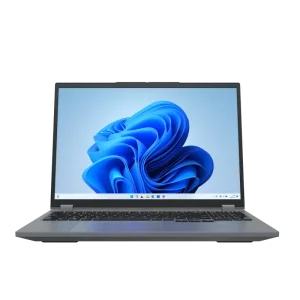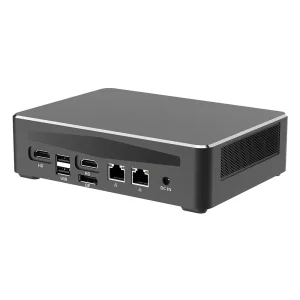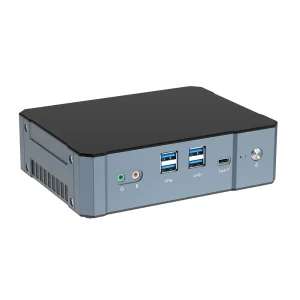
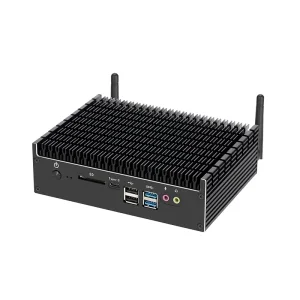
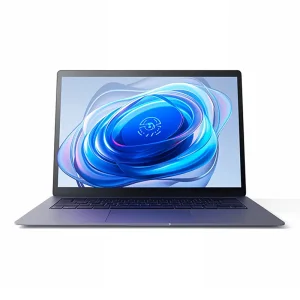
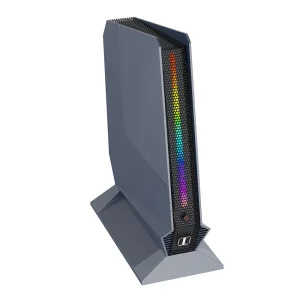
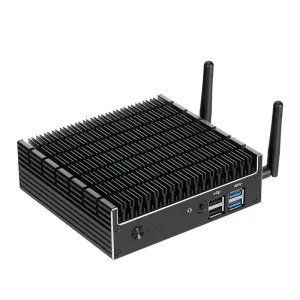
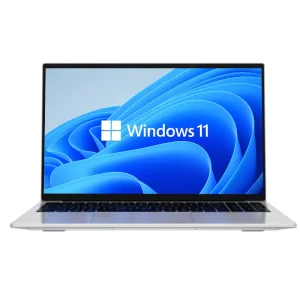
In the rapidly changing hardware architecture ecosystem, the computing landscape is witnessing a significant shift towards small form factor devices. Historically confined to low-power tasks, legacy media center configurations, and basic thin-client operations, the modern Computer Mini PC has evolved into a robust workstation alternative. This technology shift is driven by hardware innovations that pack high TDP computing capabilities into chassis sizes of less than 1 liter.
The adoption of 4nm and 7nm process nodes by top chip manufacturers has enabled high core counts (e.g., Intel 13th Gen Performance and Efficient cores) to perform within tight thermal footprints. Industrial applications now deploy i7 processors for demanding edge computing tasks.
As global corporations target strict ESG (Environmental, Social, and Governance) standards, the standard mini computer offers up to 60% reduction in power use compared to traditional tower desktops. This reduces carbon emissions and corporate operational costs.
Modern devices support complex display environments. With advancements like Intel Iris Xe graphics, modern mini hosts now power up to four independent 4K monitors, making them ideal for trading floors and digital command centers.
This transition has altered the market positioning of hardware suppliers. Companies are no longer evaluating systems based on physical size alone; they are examining the thermal efficiency curves, the availability of legacy connectivity options (such as RS232 and dual network interfaces), and extended supply lifecycles. Jinghong has built its engineering team to meet these demanding procurement specifications.
Procurement workflows for commercial, medical, and industrial computer hardware involve unique technical requirements. IT administrators face key challenges, including thermal throttling, hardware validation issues, and restrictive Minimum Order Quantities (MOQs) from tier-one brands.
Large PC hardware conglomerates focus on high-volume, standardized production. This leaves specialized system integrators and medium enterprises without custom options for configurations between 10 and 1,000 units. Jinghong supports customization down to a single unit, ensuring niche project needs are met without high initial costs.
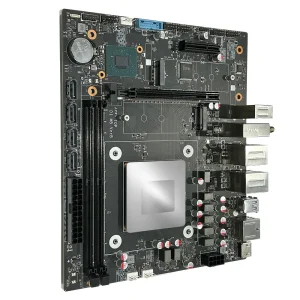
Enterprise hardware often requires deep modifications. From custom BIOS configurations (like auto-power-on loops and Watchdog timers) to custom external chassis designs and internal motherboard expansions, standard products can delay deployment timelines. Direct engineering access is essential.
Industrial computers operate in challenging environments with temperature swings, vibration, and continuous load. Standard hardware risks premature motherboard capacitor degradation or fan failure. Ensuring 24/7 reliability demands strict component selection and testing.
From the factory floor to healthcare facilities and corporate boardrooms, compact systems are replacing larger tower desktops. Below is an overview of how custom mini hosts address specific industry challenges.
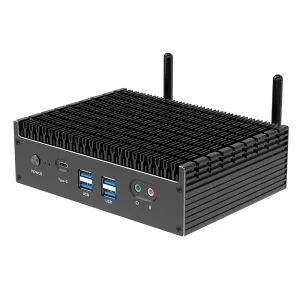
Standard desktop fans draw in dust, conductive particles, and moisture, leading to electrical shorts. In factories, fanless mini computers (like the WG1 or MU02) use extruded aluminum fin structures to dissipate heat passively. Free of moving parts, these machines run 24/7 in extreme temperatures without downtime.
Real-time image classification, predictive maintenance, and local machine learning models require dedicated GPU processing. Standard mini computers can struggle with these workloads. Advanced mini PCs, such as the X800 and RTX 3050 Ti systems, pack dedicated graphics power to run local AI inference at the network edge.
Multi-monitor display configurations require stable graphic processing. Legacy hardware often needs complex active splitter systems. Modern mini hosts (such as the GP1 with Iris Xe) output to four 4K displays from a single unit. This design reduces point-of-failure risks and simplifies cable management in digital signage installations.
The mini PC sector is entering a new phase of hardware optimization. We are moving beyond simple chassis shrinking to focus on architectural enhancements, unified high-bandwidth memory protocols, and AI acceleration.
Dedicated Neural Processing Units (NPUs) are becoming standard in modern CPUs. Future mini PCs will run lightweight Large Language Models (LLMs) and computer vision processes locally, reducing reliance on cloud infrastructure.
Next-generation connectivity will enable 40 Gbps transfer speeds. This allows mini PCs to connect seamlessly to external GPU enclosures, high-speed storage arrays, and high-resolution imaging devices.
New cooling solutions, including liquid metal TIM (Thermal Interface Materials) and low-profile vapor chambers, will support performance levels up to 65W TDP in compact form factors under 1 liter.
The transition to dual-channel DDR5 and soldered LPDDR5X layouts will remove system bottlenecks, enabling faster data throughput for complex database tasks and 3D rendering projects.
Reliability is a critical factor for enterprise IT procurement. When computing hardware is deployed across distribution networks, utility monitoring systems, or clinical environments, a high failure rate can lead to significant operational costs. Jinghong addresses this risk through a rigorous testing process and structured quality control standards.
Before leaving the facility, every mini host undergoes a 72-hour burn-in phase. These tests include high and low temperature cycling (-20°C to 60°C), physical vibration testing, and sustained full-load processing stress tests. This screening helps identify and resolve potential issues prior to global shipment.
Each unit features a unique QA tracking code. Scanning the tracking code provides access to the build log, detailing chip sourcing batches, motherboard quality checks, and the signatures of the testing technicians. This transparency ensures consistent component quality and verification.
Jinghong designs and manufactures systems to meet international regulatory standards. Our products comply with CE, FCC, RoHS, and CCC requirements, ensuring smooth customs processing and compliance with localized environmental and electronic standards.
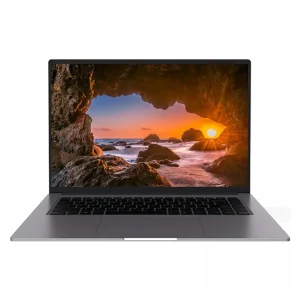
In Shenzhen, a city where technology and innovation intertwine, countless entrepreneurs set out every day with the dream of changing the world. They may want to subvert the home audio-visual experience with a mini host, or use customized laptops to give wings to education in remote areas, or use industrial computers to promote the intelligent transformation of factories... But the reality is often: the needs of small brands are always overwhelmed by the standardization of the big market.
So, Jinghong was born.


In 2014, we started with a simple belief - "No matter how small the demand is, it deserves to be taken seriously." For 9 years, we have been deeply involved in the field of customization. From mini hosts to industrial computers, from laptops to fanless embedded devices, Jinghong has never stopped exploring how to use technology to "reduce the burden" of entrepreneurs' creativity.
At Jinghong, these are not problems.
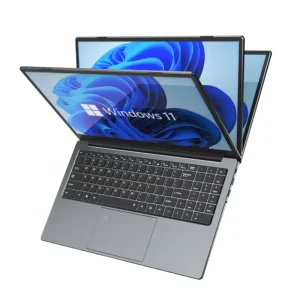
Our production line has customized palm-sized medical terminals for rural clinics in Europe, built reinforced notebooks for desert environments for start-ups in the Middle East, and designed one-hundred-dollar all-in-one computers for African educational institutions... Behind the annual sales of 100,000 units, there are 100,000 unique stories.
We remember the first order of every customer:
Before each device leaves the factory, engineers will affix a unique QR code - scan it and you can see the birth log of this machine: from the source of chip procurement to the last quality inspection process, even including the signature of the assembly technician. Because we believe: transparency is the starting point of trust.
If you are also tired of "making do", if you want your product to truly become an extension of the brand, welcome to the Jinghong factory in Guanlan, Shenzhen. Touch the antifreeze keyboard customized for polar scientific research, try the cool host designed for e-sports hotels, and you will find that the ambition of small brands should be listened to seriously.
Find answers to key technical questions about cooling design, custom orders, display support, and structural stability.
 JingHong Device