The global gaming computer and laptop manufacturing landscape is shifting from mass standardization to "Agile Customization." As of 2024, the demand for specialized gaming hardware has expanded beyond enthusiasts to include AI developers, creative professionals, and industrial simulation experts. Factories are now integrating AI-driven supply chain management to handle the complexity of high-performance component sourcing.
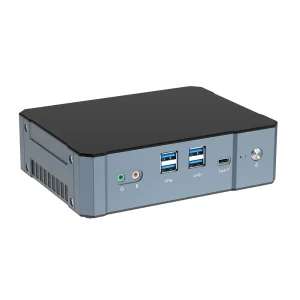
We are witnessing the rise of NPU-integrated laptops (AI PCs) and the adoption of liquid metal cooling as a factory standard. The trend is moving toward smaller footprints with higher thermal efficiency, allowing Mini PCs to rival traditional mid-tower desktops in raw gaming performance and 8K video output capabilities.
Current roadmaps focus on DDR5 6400MHz+ memory support, PCIe 5.0 SSD integration, and OLED panels with 240Hz+ refresh rates. Manufacturing factories are prioritizing modular motherboard designs to reduce e-waste and allow for easier hardware upgrades, catering to the growing "Right to Repair" movement globally.
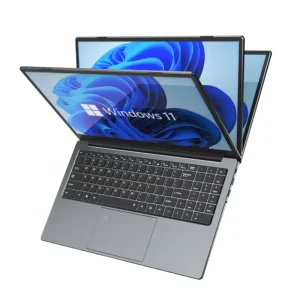
Navigating the complex world of gaming laptop procurement requires a deep understanding of the OEM/ODM ecosystem. A "Best Factory" isn't just about the lowest price; it's about thermal engineering expertise, BIOS customization capabilities, and long-term reliability. In the current market, Information Gain is achieved by understanding how a factory handles Load Balancing and Vapor Chamber (VC) cooling implementation in slim chassis.
In Southeast Asia, gaming laptops are optimized for high-humidity environments with anti-corrosion coatings. In the North American market, the focus is on "Quiet Mode" performance for dual-use (gaming/work) scenarios.
We provide full-stack solutions for E-sports hotels, education labs, and remote rendering farms, integrating PXE boot capabilities and centralized management software into our custom gaming hosts.
Every unit undergoes a 72-hour burn-in test, 50,000-hour MTBF validation for industrial-grade components, and rigorous vibration testing to ensure global shipping safety.

"Customize every possibility for the dream of small brands"
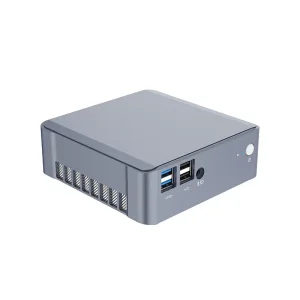
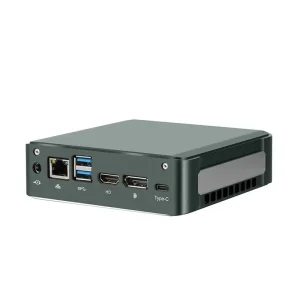
In Shenzhen, a city where technology and innovation intertwine, countless entrepreneurs set out every day with the dream of changing the world. Whether it's subverting the home audio-visual experience with a mini host or using customized laptops for education, Jinghong was born to ensure small brands aren't overwhelmed by market standardization.
Since 2014, we have believed: "No matter how small the demand is, it deserves to be taken seriously." With 9 years of deep involvement in customization—from mini hosts to fanless industrial computers—we help creative minds "reduce the burden" of hardware complexity.
Our self-developed heat dissipation structures allow mini hosts to run stably for 50,000+ hours. We employ 72 hours of rigorous testing covering high/low temperatures, vibration, and long-term load, backed by a 3-year warranty commitment.
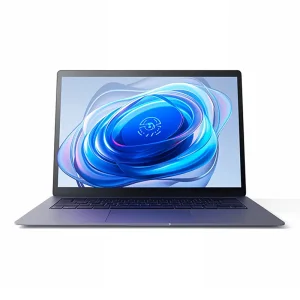
Future gaming laptops will act as local AI servers, utilizing integrated NPUs for real-time ray tracing optimization and voice-driven OS control.
Moving toward GaN (Gallium Nitride) internal power supplies to reduce laptop weight while maintaining 300W+ power delivery for high-end GPUs.
The "Gaming Industrial PC" is a new category—using high-end GPU power for real-time factory digital twins and automated optical inspection (AOI).
A: China-based factories like Jinghong offer unparalleled supply chain integration. This means faster access to the latest Intel/AMD chips, lower costs for high-end components like mechanical keyboards and high-refresh panels, and the ability to pivot production quickly for custom OEM requirements.
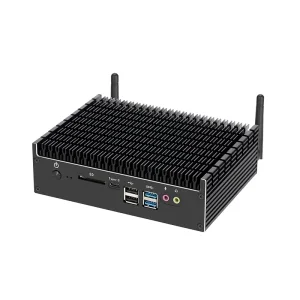
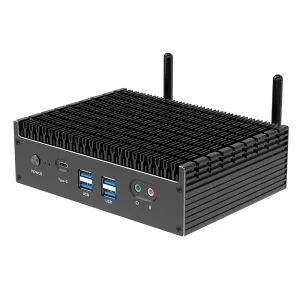
A: For industrial gaming applications or medical terminals, fanless design prevents dust accumulation and mechanical failure. Our WG1 series uses advanced heat-pipe dissipation to maintain performance without moving parts, ensuring 24/7 stability.
A: Yes. At Jinghong, we provide deep software-level customization, including custom BIOS splashes, specialized power-on behaviors, and pre-installed OS images tailored to your specific application scenario.
A: For standard configurations with custom branding, lead times are typically 2-3 weeks. For deep hardware-level modifications, the process involves prototyping and testing, which can take 6-10 weeks depending on complexity.
Jinghong is not a cold factory, but an amplifier of dreams. Before each device leaves the factory, engineers affix a unique QR code - scan it to see the birth log of your machine: from chip procurement to the last quality inspection. Transparency is the starting point of trust.
Your needs are our most important orders. Welcome to the Jinghong factory in Guanlan, Shenzhen.
 JingHong Device