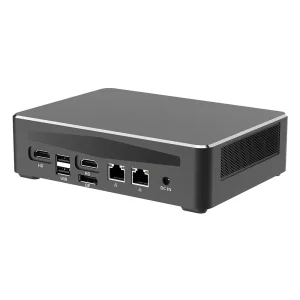
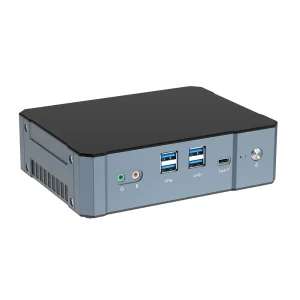
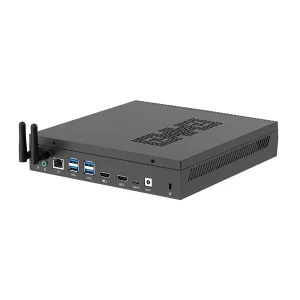
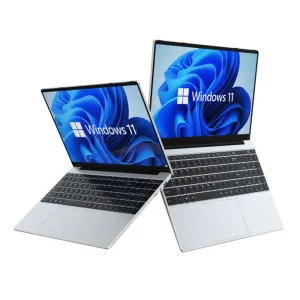
Explore our premium selection of micro-form-factor devices, built to deliver 24-hour stability and high-performance computing capabilities across extreme environments.
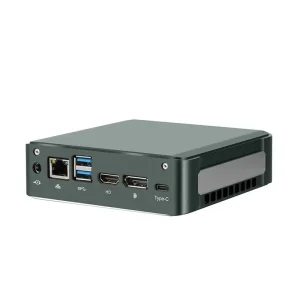
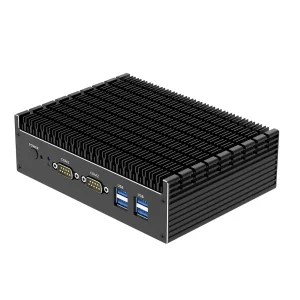
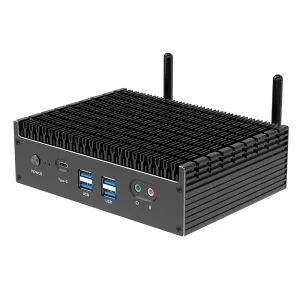
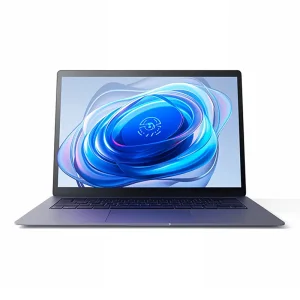
In the modern enterprise landscape, the boundary between traditional high-performance workstations and micro-computing nodes has blurred. Today's global markets demand maximum performance wrapped in minimal physical footprints.
Technological convergence, driven by lithography leaps and thermal architecture breakthroughs, has enabled modern micro hosts and mini laptops to rival their larger tower counterparts. Historically, adopting small-form-factor (SFF) devices meant trading off compute capability, thermal efficiency, or expandable I/O profiles. However, contemporary enterprise needs—spanning from smart kiosks and Edge AI nodes to complex hotel gaming desks and remote learning solutions—have reshaped user requirements.
From a hardware engineering perspective, the optimization of Intel® Comet Lake-U and Raptor Lake architectures has allowed manufacturers to maintain high thermal design power (TDP) thresholds within ultra-thin structures. Whether deploying fanless industrial microcomputers in hostile dust-heavy factory environments or distributing metal-alloy laptops to remote educational institutions, organizations now seek high uptime (50,000+ stable hours) and highly-tailored I/O profiles like multi-Gigabit Ethernet ports and quad-display outputs.

B2B procurement is no longer a simple transactional buying cycle. High-performance microcomputing acquisition requires alignment across engineering specifications, regulatory compliance, and total cost of ownership (TCO).
Continuous uptime is mandatory for telecom, retail, and manufacturing sectors. Modern micro hosts like the MU01 are deployed as 24-hour stable edge devices, integrating automated watchdog timers and advanced electrostatic discharge (ESD) protection to survive uninterrupted workflows.
Standard retail computers lack specialized ports. Enterprise integration requires flexible layouts including dual/triple network controllers (Intel i225-V 2.5G), RS232/RS485 serial ports for legacy machinery, custom BIOS behaviors, and multi-display outputs (HDMI/DP) for commercial signage.
For desert field operations, e-sports hotels, or scientific research, the chassis must act as a primary heatsink. Passive cooling (fanless) structures eliminate mechanical fail-points, while high-grade aluminum alloys prevent physical degradation under extreme vibrations.

Nestled in Guanlan, Shenzhen—the global epicenter of SFF hardware engineering—our facilities combine advanced tooling, local supply ecosystem velocity, and rigorous silicon validation protocols.
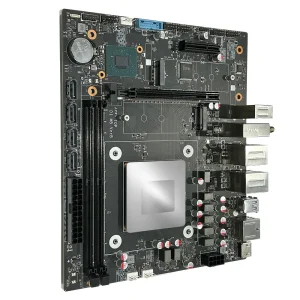
The core advantage of manufacturing in Shenzhen lies not merely in raw cost metrics, but in the velocity of integration. A custom motherboard layout, such as the Raptor Lake HX-based D1 model, can go from computer-aided design (CAD) to thermal modeling, validation routing, high-density SMT (Surface Mount Technology) assembly, and physical chassis prototyping in a fraction of standard lead times.
This agility is the bedrock of supply chain resilience. By working closely with silicon leaders like Intel, our factories receive direct architectural guidance, enabling us to build microcomputations with top-tier components. We mitigate logistics disruptions through deep vertical integration: housing design, component sourcing, SMT placement, assembly, testing, and final quality control within the same regional ecosystem.
Customize every possibility for the dream of small brands
In Shenzhen, a city where technology and innovation intertwine, countless entrepreneurs set out every day with the dream of changing the world. They may want to subvert the home audio-visual experience with a mini host, or use customized laptops to give wings to education in remote areas, or use industrial computers to promote the intelligent transformation of factories... But the reality is often: the needs of small brands are always overwhelmed by the standardization of the big market.
So, Jinghong was born.
In 2014, we started with a simple belief—"No matter how small the demand is, it deserves to be taken seriously." For 9 years, we have been deeply involved in the field of customization. From mini hosts to industrial computers, from laptops to fanless embedded devices, Jinghong has never stopped exploring how to use technology to "reduce the burden" of entrepreneurs' creativity.
We understand your struggle:
At Jinghong, these are not problems.
Our production line has customized palm-sized medical terminals for rural clinics in Europe, built reinforced notebooks for desert environments for start-ups in the Middle East, and designed one-hundred-dollar all-in-one computers for African educational institutions... Behind the annual sales of 100,000 units, there are 100,000 unique stories.
Customized service like a partner
Production philosophy that lets quality speak
Long-termism that grows with you
We remember the first order of every customer:
Enterprise statistics demonstrating our commitment to quality, manufacturing excellence, and real-world implementation.
Jinghong is not a cold factory, but an amplifier of dreams.
Before each device leaves the factory, engineers will affix a unique QR code - scan it and you can see the birth log of this machine: from the source of chip procurement to the last quality inspection process, even including the signature of the assembly technician. Because we believe: transparency is the starting point of trust.
If you are also tired of "making do", if you want your product to truly become an extension of the brand, welcome to the Jinghong factory in Guanlan, Shenzhen. Touch the antifreeze keyboard customized for polar scientific research, try the cool host designed for e-sports hotels, and you will find that the ambition of small brands should be listened to seriously.
Jinghong, customization is not just about hardware, but also the confidence of entrepreneurs to move forward. Your needs are our most important orders.
Analyzing how different SFF computing form factors optimize workflows across industries and regional deployment locations.
Standard desktops accumulate dust, causing thermal throttling and component failure. The fanless GM1 and MU01 configurations, enclosed in extruded aluminum shells, conduct heat passively. Lacking moving parts, they withstand particulate-heavy air, grease, and vibrations in machine shops.
Traditional full towers occupy massive spatial footprints, ruining minimalist interiors. The GM2 Game Mini PC, paired with RTX 3050 Ti graphics modules and Raptor Lake processing, offers heavy GPU rendering capabilities without occupying precious real estate, allowing sleek layout designs.
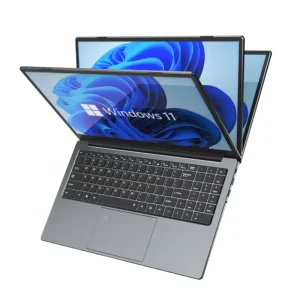
Field teams in the Arctic or desert environments require rugged hardware. The custom NB01 and S1 series feature reinforced magnesium-aluminum alloy structures, outdoor-readable displays, and power system adaptations to support diverse solar generator arrays.
Addressing crucial technical questions raised by system integrators, IT procurement directors, and hardware designers.
Fanless architecture relies entirely on passive convection and conduction via the outer chassis fins. This eliminates the mechanical failure point of physical fans, prevents dust and particulate buildup inside the motherboard cavity, and yields quiet operation while achieving over 50,000 hours of continuous operation.
Shenzhen's ecosystem offers complete manufacturing integration. With SMT lanes, chassis machining shops, and chip suppliers located in close proximity, Jinghong can run custom low-volume prototyping without incurring large logistics setup fees, enabling one-unit customizations.
While newer processors are available, Comet Lake-U remains a popular choice for commercial and industrial terminals. It provides an excellent performance-to-cost ratio, low TDP characteristics for passive cooling setups, and mature driver validation for legacy software stacks.
Customization spans structural, functional, and digital layers. This includes BIOS customizations (e.g., custom splash screens, auto-on logic), I/O modifications (RS-232, custom USB layouts), ruggedized metal shells, high-brightness panels for outdoor use, and custom laser-etched branding.
Yes. Many of our modern micro hosts, including the GP1 and GM3 configurations, feature multiple display interfaces (HDMI, DisplayPort, and Type-C) to power up to four displays simultaneously in 4K resolution, making them perfect for digital signage and trading desks.
Each unit undergoes 72 hours of intensive environmental validation testing. This includes high and low temperature chamber cycles (-20°C to 60°C), constant vibration simulations, full system load stress testing, and custom boot-loop verification to confirm runtime reliability.
Explore our industrial-grade, portable computing assets designed to deliver exceptional reliability and raw performance for demanding B2B deployments.
 JingHong Device